


Planning for Boomers

May 21st, 2013

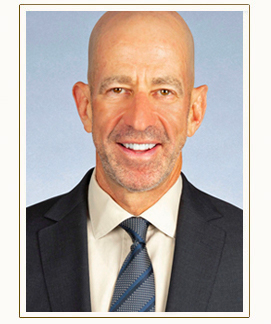
This guest blog entry has been written by Susan Yubas, a Certified Senior Advisor and the founder of FYI Senior Living Solutions, Inc.

The other day I realized I am exactly two thirds of my mother’s age.  That hit me hard, as I began to think of life as being divided in thirds…and realized that if the first two thirds of my life went by in a blink, then I want this last third to go by very slowly.

The way we look at aging has changed drastically over the years.  People are doing great things in this stage of life, some with assistance, and rather than looking at help as taking away independence, they view accepting assistance as a means to reaching potential – to being everything they can be.  I recently listened to a talk given by the actress Jane Fonda on reaching what she calls life’s “third act.”  She realized that she could control a good part of this time of her life and decided that she was not going to live the old paradigm of aging (think of a bell curve where the start of the curve is birth, the peak is middle age and then it declines sharply to old age,) but rather to view aging as a staircase that you climb to make added years happier, more successful and more liberating.  Think of it – when you are an adolescent, you plan for college, then you plan for your work and your family years.  Why not view the “boomer years” as a time to plan for this next stage of your life and to use those years to make a difference.

Six years ago, a gerontologist at Cornell University started asking older people for their advice towards solving life’s major challenges. Called the Cornell Legacy Project, it asked seniors for their advice as to how to age fearlessly and well.

The researchers were surprised to find that those in the study held a generally positive view about old age. One response came from an 81-year old man: “Embrace it. You still enjoy life, and there’s still purpose in your life. A 94-year old woman suggested: “My advice about growing old? I’d tell them to find the magic.” Old age is very different from what seniors anticipated – and it exceeds their expectations. People felt freer to pursue interests and clearer about their life goals and how they wanted to spend their time. Many described their life after 70 as a quest or an adventure.

There was overall agreement on the importance of maintaining social connections finding meaningful ways to participate in activities in order to assure a positive and enjoyable old age. These relationships and productive roles can be difficult as life transitions such as retirement, widowhood, and health problems occur.  The seniors interviewed for this study suggested that starting around age 60, everyone needs to become aware of the possibility of becoming isolated and take steps to stay involved.

Many seniors also said that the lesson they had learned was to plan carefully for where you will live in old age. Based on their own experience and those of parents and friends, they agreed that younger people should begin to think about living arrangements when they are still active and healthy – both to increase their options for where they can live and also to reduce responsibility and anxiety on the part of their children.  The seniors noted that some people unnecessarily suffer with insecurity, isolation, and inconvenience because they stay in their homes rather than move to a more stimulating environment.

Travel.  Take a class.  Volunteer.  Mentor.  Aging can mean an extended active and productive life.  Most aging Americans do not think that when they retire they will no longer be productive.   Many of us believe old age begins after age 80.  We exercise regularly and eat a healthier diet so we feel years younger than we are.  We envision years and years of health and activity and being able to afford what we want.   We believe 60 is the new 40, and the older we get, the younger those older than us become.  In many cases, we will continue to learn, grow, and find new ways to be productive, creative and relevant.

We still need to think ahead.  Not all of us are really thinking about the time when we may become frail and many of us are very unprepared for that time in our lives.  We have begun to lose our parents and some friends.  Some of us have lost spouses. But we still do not put much thought into about what happens when we are no longer able to be as independent and active as we currently are, even if it is at age 90 plus.

Aging is more of an attitude than a number. This is a time to re-assess what you want from life and what makes you really happy. Know your capabilities and what makes life exciting for you.

Live for today, but remember to plan for tomorrow.

Considering Long-Term Care Insurance

May 15th, 2013

In planning for retirement, it is important to consider what would happen if you needed assistance with daily living over a long period of time. Most people in that situation would prefer to be able to stay in their own home with the assistance of a home health-care aide rather than move into a nursing home. But would you be able to afford it? In facing this question, many people are considering long-term care insurance.

People with lower incomes can rely on Medicaid for help with long-term care, and wealthy people will likely be able to afford the cost of care on their own, or pay high insurance premiums if they choose. It is people with middle incomes who must decide whether long-term care insurance makes sense for their situation, with money being the key factor. Long-term home health care is expensive, but so is long-term care insurance.

The American Association for Long-Term Care Insurance reports that an average 60-year-old couple purchasing a policy today would pay over $3,700 per year for benefits totaling $162,000 each, which would increase to $329,000 each by the time they reach the age of 85, due to inflation protections in the policy. That is up 10 percent from the premium price just one year ago. Policies without inflation protection are available for lower premiums, but the benefits available do not increase with time, so policy holders would likely still have to pay for some costs out of pocket.

Long-term care insurance can cover the cost of assistance with daily living at home or in a nursing home or assisted-living facility. The insurance can also give peace of mind to your children, who may be faced with how to make financial decisions in your best interest.


For more information about our elder law services, visit www.elderlawnewyork.com.

How Chained CPI Could Affect Social Security

May 14th, 2013

As part of negotiations aimed at reducing the deficit, Congress and the President have considered changes to the way the Consumer Price Index (CPI) is calculated. “Chained CPI,” as the proposed method of calculation is known, could have adverse affects on Social Security benefits, as cost of living adjustments are based on CPI.

Proponents of chained CPI say that the current method of calculating CPI overestimates the real effect of inflation. When prices go up on some items, consumers may choose to purchase something else instead, thus mitigating the effects of inflation. This “substitution bias” is addressed by chained CPI. This technical change would result in lower payments for Social Security beneficiaries.

The proposed change is popular among politicians seeking to reduce the deficit, as it is estimated that there could be a reduction of about $390 billion from the deficit over the first decade, with about one third of the savings resulting from lower Social Security benefits payments.

Of course, Social Security beneficiaries do not want lower payments, and advocates for seniors have pointed out that chained CPI is not appropriate for estimating the cost of living for older people, as many of their expenses, such as medication and health care, are fixed, and therefore not prone to substitution bias. Further, Social Security is financed separately from the rest of the budget, and does not contribute to deficits in other parts of the budget. The bottom line is that seniors who depend on a fixed income are least able to afford cutbacks.

For more information about our elder law services, visit www.elderlawnewyork.com.

New York Medicaid and Medicare Part D: Working Together

May 8th, 2013

The state of New York has several major public health insurance programs, including Medicaid, commonly known as “Regular Medicaid.”

While Regular Medicaid in New York offers extensive health care services including: dental care; diagnostic testing; home care; hospitalization; mental health support; out-patient care at hospitals and community clinics; and physical therapy, clients of Medicaid in New York must receive their prescription drugs via Medicare Part D.

Any individual currently receiving or about to begin receiving New York State Medicaid must join a Medicare prescription drug plan, or they will lose their Medicaid benefits. When an individual becomes eligible for both Medicare and Medicaid, he or she will automatically be assigned to a Medicare Prescription Drug Plan in order to not miss even one day of coverage. Though a prescription drug plan is mandatory, enrollment in Medicare Part D is not; enrollment in another plan which better meets prescription drug needs is allowed. Patients are able to switch to another plan at any time.

Typically, as part of Medicare Plan D, the patient must pay a nominal amount, like a copayment, for the medication. Individuals who have full coverage from Medicaid while living in a residential home, an adult living or assisted living facility will likely be required to pay a small medication copayment for each  medication. If an individual has full Medicaid coverage and resides in a nursing home, he or she will not be required to pay anything for covered prescription drugs.

Medicare’s State Pharmacy Assistance Program (SPAP) for prescription drug coverage is determined by each state.  New York State’s Medicare’s State Pharmacy Assistance Program may determine that a patient should receive additional coverage when they join the Medicare Prescription Drug Plan, or may require the patient to enroll in a separate state program for prescription payment assistance.

Clients of New York Regular Medicaid must receive health care services through their managed care plan. Regular Medicaid in New York is available to single adults, childless couples at lower income levels, caretaker adults, the elderly, the disabled, and children, subject to some restrictions. Regular Medicaid may also provide retroactive coverage.


For more information, visit www.elderlawnewyork.com.

An Extreme Case of Poor Estate Planning

May 2nd, 2013

Last year, Roman Blum died at the age of 97, leaving an estate valued at nearly $40 million. He also died without a will. Blum made millions building hundreds of houses in the vicinity of Staten Island. He had no known living family members, and if none are found, then his estate will escheat to the state of New York, making it the largest unclaimed estate in the state’s history.

This is an extreme example of poor estate planning, in which a man very successful in business nonetheless neglects the relatively straightforward task of directing where his money should go upon his death. It is unfortunate that this person missed the opportunity to leave bequests to his friends or charitable organizations that he cared about.

Blum’s estate is being handled by a public administrator overseen by the Richmond County Surrogate’s Court.  The administrator is in the process of selling Blum’s property, paying his taxes and conducting an extensive search for any living relative. If that search fails, the money goes to the state government.

Although this case is unusual, many people do not properly prioritize estate planning and fail to take full advantage of the choices they have in deciding how they would like their assets distributed when they die.  In addition, proper estate planning can save your heirs money by structuring your estate in a way that is most advantageous in terms of taxes and probate costs.


For more information about our estate planning services, visit www.littmankrooks.com.

Put Your Accounts in Your Daughter’s Name — What Could Go Wrong?

April 24th, 2013


By: Bernard A. Krooks, Certified Elder Law Attorney

Seniors are subjected to a constant drumbeat of advice: make sure you have no assets in your own name, or you will lose them to the nursing home. Transfer everything to your children to “protect” your assets. Sound familiar?  Is it good advice?

We usually counsel against such transfers.  They are a bad idea for several reasons, but chiefly for these two reasons:

  • 1.    Such transfers are not likely to work, given the five-year look-back period for Medicaid eligibility. In other words, if you make such a transfer shortly before you go to the nursing home, you won’t be eligible for government assistance with your long-term care costs for up to five years — or even longer, in some cases.
  • 2.    Even if you successfully “protect” your assets from your own nursing home costs, you have just subjected them to the recipient’s creditors and claims.

That second item was the one that cost Deborah Block (not her real name) her entire life savings. In 2002 Ms. Block transferred her brokerage account, worth about $200,000, into her daughter’s name. Why would she do such thing? She later testified that it was because she understood that she could not have any assets in her own name if she later wanted to qualify for Medicaid assistance with her long-term care costs. She wanted to protect her money from that possibility, and also from any “scammers” who might try to talk her out of her funds.

Ms. Block, 71, lives and still works as a nursing assistant in a small town. She and her husband owned a pharmacy there, and sold their business to a large chain store ten years ago, just before her husband’s death. The proceeds went into an account in their joint names, and were transferred to Ms. Block’s name upon her husband’s death.

Later in that same year, while visiting her daughter in New York, Ms. Block decided to put her entire life savings into a brokerage account in her daughter’s name. The daughter’s Social Security number was listed on the account, the daughter paid taxes on the income, and she was listed as the sole owner. Ms. Block did have a debit card on the account, which she could (and did) use to pay for purchases.

In 2010, after the stock market dropped precipitously, Ms. Block’s daughter moved the money into a new investment vehicle. She paid over $18,000 for a complicated trust arrangement in order to protect the money from creditors. Although she initially contacted the purveyors of the trust instrument, she received documents for her mother’s signature from them.  The documents included a trust naming a third person as trustee, and a private annuity agreement.

Meanwhile, Ms. Block’s daughter was having trouble with her own investments. She owned a piece of investment real estate with a second mortgage. When that loan’s balloon payment came due, the property had diminished in value to the point that she could not refinance — so she declared personal bankruptcy. The question then became whether her mother’s brokerage account was part of her bankruptcy estate.

The bankruptcy court ruled that yes, the account did belong to Ms. Block’s daughter. Although both women testified that they thought of the money as belonging to Ms. Block, and that the daughter was just holding it in a sort of trust arrangement for her mother, the bankruptcy court noted that Ms. Block had said she transferred the money in order to make sure he had no assets and could qualify for Medicaid if she ever needed it. Here is the bankruptcy judge’s telling analysis:

“After all, [Ms. Block and her daughter] argue, why would a woman who was advancing in years, nearing retirement and working for an hourly wage, give the entirety of her retirement nest egg to her daughter? The answer lies in Ms. [Block]‘s own testimony — she wanted to remove the funds from her own name and place them into the name of her daughter, in order to be eligible for Medicaid and other publicly available benefits, should the need arise. Ms. [Block] can’t have it both ways — she can’t part with title for purposes of Medicaid eligibility, and at the same time claim that she retained an equitable title to the asset. To allow this kind of secret reservation of equitable title would be to sanction Medicaid fraud.”

The bankruptcy judge, incidentally, also completely dismissed the effect of the trust arrangement established by Ms. Block’s daughter. The end result? Ms. Block’s life savings were swept into the bankruptcy proceeding to satisfy her daughter’s investment losses.

The moral of this story is that if you are serious about wanting to protect your assets from the catastrophic cost of long-term care, it is imperative that you consult with a certified elder law attorney who can guide you on the best course of action for you.


For more information, visit www.elderlawnewyork.com.

Senior Apartments: An Option For Active Independent Elders

April 23rd, 2013

Our latest guest post has been written by Joe Nevins, the Administrative Coordinator at Kittay House

When considering living options for elders, there are choices beyond nursing homes and assisted living facilities. Senior Apartments allow elders to live independently and to have an active vibrant community around them.  In a Senior Housing setting there will be elders who are still working or volunteering, as well as those who need extra help managing and make individual arrangements for support services.

Senior housing is all about community. At Kittay House Senior Housing, for example, tenants can be involved in activities as diverse as the city itself – from trips to Shakespeare in the Park, the Culinary Institute, New York’s Lower East Side or the Apple Store to visits from local artists and entertainers, on-site movies, lectures and workshops, and even live broadcast from the 92 Y.  Meals can be shared (Kittay House offers three daily meals included in the monthly fee).
Physical well-being is another important aspect of senior apartments. Tenant units should be equipped with emergency call bells, and senior-friendly physical activity should be available.  At Kittay House, tenants may participate in a walking club, in movement classes, Yoga, Tai Chi or a special falls prevention series, all designed to help seniors stay fit and active.
Of course convenience is important, too.  Tenants in senior apartments appreciate the housekeeping and linen services – at Kittay they’re included in the fee – as well as proximity to transportation, shopping and medical services.  Kittay, conveniently located near public transportation, has on-site medical professionals and is across the street from the VA Hospital.

For seniors who are still active – working, volunteering, involved in cultural pursuits senior apartments offer community and convenience.  If you’d like to consider senior housing, contact Director Arlene Richman at (718) 410-1441 or read more at http://www.kittayhouse.org.

For more information, visit www.elderlawnewyork.com.

Paying for Long-Term Care at Home

April 15th, 2013

By Susan Yubas

Receiving long- term care is expensive.  If you or your loved one wants to stay at home but requires assistance to function, how will you pay for it?

Medicare determines whether or not care provided at home will be covered based on whether or not the type of care required is considered medically necessary, or is considered to be more supportive in nature.  Medicare calls this type of supportive care “custodial” care.

Custodial care includes support and assistance with activities of daily living (also called ADLs), which include a range of activities from shopping, light housekeeping, and laundry to meal preparation, dressing, bathing, toileting, and help transferring to or from a chair or bed.  These services do not require the skills of a nurse, and are usually provided by companions and home health aides.  Medicare can cover medical social services, some medical supplies and durable medical equipment like a wheelchair or walker. Each of these requires a referral or prescription from your doctor.

When you need custodial care to help with bathing, dressing, and assistance with household chores, you will have a choice between hiring help through a Medicare certified agency or hiring an independent caregiver on your own. There are pros and cons of each, and you will want to consider the different options in your community.

Long-term care insurance is an option that can help provide a way for you to pay for this care. There may also be community services available that will supplement in-home care and help you make the most of your financial resources.

Skilled care is usually provided by licensed professionals such as nurses and physical and occupational therapists and may also include social workers, some laboratory services and medical equipment. These services, provided under the supervision of a doctor, are considered to be “medically necessary.” Sometimes, this type of care is needed at home when a patient is discharged from a hospital and is part of a treatment plan of care ordered by your doctor.  Examples of skilled care include wound care, tube feeding, respiratory therapy and the administration of IV medication.

Get more information on Medicare coverage for home health services here.

Medicaid provides coverage for some long-term care services at home and in the community. Eligibility for Community Based Medicaid is determined by income, resources, age, and disability levels.  Medicaid can pay for a number of medical services that can help you continue to live in your home, including home care, personal care aides, adult day care, physical, occupational and speech therapy, and medical equipment such as wheelchairs  The need for these services must be certified by a physician and you must receive these services from a Medicaid certified provider.

Get more information about Medicaid eligibility for long-term care here.

Again, it is important to think about long-term care, regardless of whether it is provided at home or in a residential facility, before care is needed.  Deciding how and where you receive care is a major decision and it is important to examine all of your options and choices.

Susan Yubas is Director of Business Development at The Bristal Assisted Living.  She is also a Certified Senior Advisor and the founder of FYI Senior Living Solutions, Inc.
For more information, visit www.elderlawnewyork.com.

Disabled Veterans Do Not Need Additional Medical Exam in Some Cases

April 9th, 2013

The Department of Veterans Affairs (VA) has made a change in the process of applying for disability benefits that could help some veterans get their benefits faster.  When there is sufficient evidence of service-related disability in an applicant’s file, an in-person medical examination will not be required.

The VA tested the streamlined process in a pilot program that lasted for 15 months.  The Department found that 38 percent of applicants qualified for quicker processing, called Acceptable Clinical Evidence (ACE).  In this process, a medical professional decides whether an applicant’s file provides sufficient evidence of a disability, in which case an additional in-person exam is not needed.  This was shown to reduce average processing time from 25 days to 8 days.  Claims can be processed faster within the VA, and the individual applicant does not have to wait for a doctor’s appointment.

Veterans most likely to benefit from the change are those who have already received medical treatment and have information about that treatment in their files.  Sometimes information from the case file can be supplemented with an interview by telephone.

The VA began expanding the program in October of 2012, as one part of a larger initiative to reduce processing time for veterans’ disability benefits.  The VA has acknowledged that average processing time for disability claims is 272 days.  The Department has said its goal is to reduce the processing time to 125 days by 2015.

For more information about our legal services for veterans, visit www.elderlawnewyork.com.

Sequester Cuts Will Harm Seniors, Veterans

April 1st, 2013

As Congress failed to take action, the cuts required by the Budget Control Act, commonly referred to as the sequester, began taking effect on March 1.  Spending cuts of $85 billion are being imposed across federal programs, both military and domestic.  While many of the core programs that seniors and veterans rely on are exempt from the cuts, other programs will be affected, some of which protect the most vulnerable.

First, the good news: funding for the Department of Veterans Affairs (VA), Social Security, Medicaid and Medicare is exempt from the cuts.  However, while those benefits will not change, the federal workforce that administers them will be reduced, causing delays and limits to access.

In the case of Medicare, for instance, there will be no change in benefits, but doctors and other Medicare providers will see a two percent reduction in their payments.  This could lead some doctors to drop Medicare patients, resulting in longer waits for doctors who do accept Medicare.

While Social Security benefits will not change, services provided by the Social Security Administration may be cut back, including closing some offices.  The large backlog of disability claims will likely grow even larger.

While these core programs are spared the full force of the cuts, other needed programs will be drastically affected.  Meals on Wheels and other senior nutrition programs will see cuts resulting in 18.6 million fewer meals being served to needy people, according to the National Association of Area Agencies on Aging.  The Low Income Home Energy Assistance Program will discontinue help to approximately 400,000 households, often low-income seniors that rely on the assistance to heat and cool their homes.

The Area Agencies on Aging reports that other important services to seniors will also be cut, including in-home help with bathing and dressing and transportation to medical appointments or to buy groceries.  Seniors are put at risk by these cuts, and any savings to the federal government are offset by the cost to society of the inevitable increase in health care needs when seniors are not able to get help with daily living.

While there will be no change in VA benefits, some veterans will still be affected by the cuts.  Some homeless veterans will no longer be able to receive assistance from a housing program run by the Department of Housing and Urban Development that provides grants to the states to help people find housing.

In addition, because of the sequester, some job-training programs for veterans will no longer receive funding from the Labor Department, affecting tens of thousands of vets.

Active duty personnel will also be affected by the suspension of the Tuition Assistance Program, which helps service members with the cost of courses toward high school and college diplomas.  The program provided hundreds of thousands of active duty military personnel with up to $4,500 per year for tuition at accredited schools.

These arbitrary spending cuts are more onerous because they were never supposed to happen and are the result not of careful lawmaking but of Washington gridlock.

For more information, visit www.elderlawnewyork.com.